How to install a new kitchen faucet step by step
A working kitchen faucet install in Tupelo takes 60 to 90 minutes if the shutoff valves hold. Here is the full step-by-step, plus the mistakes that cause leaks.
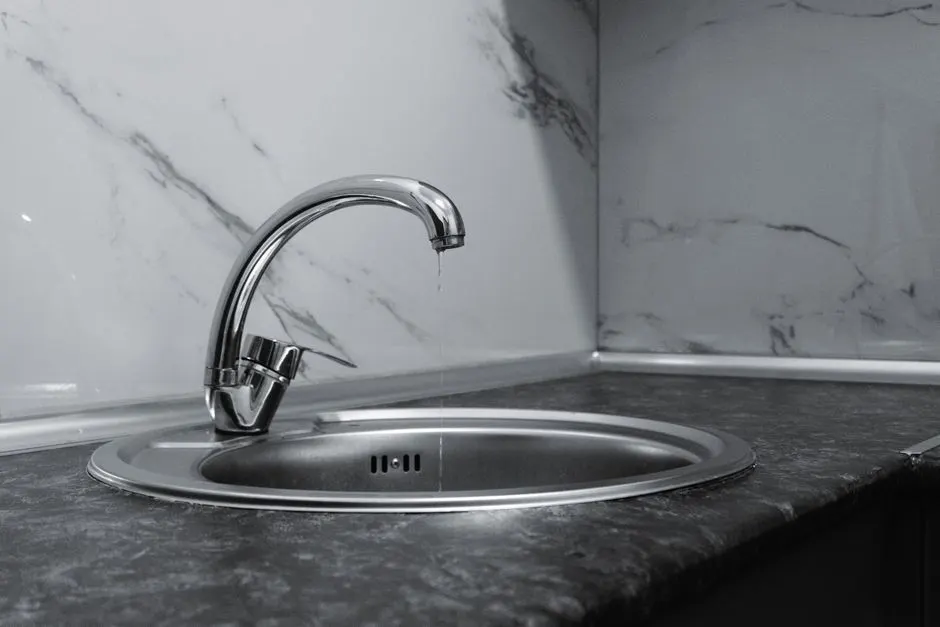
Installing a new kitchen faucet is a 60 to 90 minute job for most Tupelo homeowners, and you can do it with a basin wrench, an adjustable wrench, and a roll of Teflon tape. The whole job comes down to six steps: shut off the water, pull the old faucet, clean the deck, set the new one, reconnect the supply and sprayer lines, then pressure test. If your shutoff valves are original to a 1970s or 1980s house, the job gets harder - those valves often fail the moment you turn them, and that is the single most common reason a simple swap turns into a service call.
What you need before you start
Kitchen faucet installation is a plumbing task that replaces the fixture that delivers hot and cold water to your sink, and it is needed whenever the old faucet drips, corrodes, or you are upgrading to a pull-down sprayer. Gather everything before you crawl under the cabinet, because once you are on your back with a flashlight in your teeth, you are not going back to the truck.
Here is the short list:
- New faucet with its supply lines and mounting hardware
- Basin wrench (the one tool you cannot fake)
- Adjustable wrench and a small flathead screwdriver
- Bucket, old towels, and a shop vac for the cabinet floor
- Teflon tape or pipe thread sealant
- Flashlight or headlamp - cabinet lighting is always worse than you think
Most kitchen faucets sold in 2026 run $120 to $450 at big-box stores in the Tupelo area, and the install kit is usually included. If you are replacing a faucet on a granite or quartz countertop, add a roll of plumber's putty or a silicone gasket - do not skip that step or water will track under the base.
Step 1: Shut off the water and drain the lines
Shut off the hot and cold supply valves under the sink, then open the faucet handle to release pressure and drain the remaining water into a bucket. This is the step people rush, and it is the step that floods a cabinet.
Turn both valves clockwise until they stop. If a valve will not close all the way, or you hear water still moving through the line, stop and call us - that valve is about to fail, and no amount of Teflon tape fixes a broken gate. Open the faucet to the middle position and let it run dry. Put a bucket under the supply lines and crack the compression nut loose with your adjustable wrench. Expect a cup or two of water. That is normal.
If you have a garbage disposal repair issue you have been ignoring, now is the time to look at it - you are already under the sink and the power is off. A disposal that hums without spinning usually has a jammed flywheel, and freeing it takes about five minutes with a hex wrench.
Step 2: Disconnect the old faucet
Disconnecting the old faucet means removing the supply lines, the sprayer hose, and the mounting nuts that clamp the faucet to the sink deck. Work from the underside first - the top will not lift until the bottom is free.
- Disconnect the hot and cold supply lines from the shutoff valves.
- Disconnect the sprayer hose from the diverter or the faucet body.
- Use the basin wrench to loosen the mounting nuts holding the faucet to the sink.
- Lift the old faucet straight up and out. If it is stuck, a gentle twist frees it - do not pry against the countertop.
Set the old faucet aside until the new one is fully installed. If a mounting nut is seized, a shot of penetrating oil and 10 minutes of patience beats a stripped nut every time.
Step 3: Clean the sink deck and test the shutoff valves
Clean the sink deck and test the shutoff valves before you set the new faucet, because once the new fixture is bolted down you are not going to want to pull it again. Scrape off old putty, mineral buildup, and any rust flakes with a plastic scraper.
Now the important part. Turn each shutoff valve back on for five seconds with the bucket still in place. If either valve drips from the stem or will not fully reopen, replace it now. A failing shutoff valve is the number one reason a faucet swap turns into a leak repair call in Tupelo - the valve was already weak, and the act of turning it finished the job.
While the deck is bare, check the sink drain and the disposal flange. If the drain basket is corroded, replacing it now saves you pulling the faucet again in six months.
Step 4: Set the new faucet and connect the supply lines
Setting the new faucet means threading the supply lines and sprayer hose through the sink holes, seating the faucet on a fresh gasket or bead of putty, and tightening the mounting nuts from underneath. Read the manufacturer's diagram once before you start - every brand routes the lines a little differently.
Feed the lines through the center hole first, then the sprayer hose if your sink has a separate hole. Set the faucet down and center it. From underneath, hand-tighten the mounting nuts, then finish with the basin wrench - snug, not gorilla-tight. Overtightening cracks plastic mounting hardware and warps the gasket, which is how a brand-new faucet starts leaking at the base.
Connect the supply lines to the shutoff valves. Hand-tighten the compression nuts, then a quarter turn with the wrench. If your new faucet came with braided stainless lines, do not use pipe dope on the threads - the rubber cone inside the nut does the sealing.
Step 5: Reconnect the sprayer and disposal lines
Reconnecting the sprayer and disposal lines is the step where a small mistake shows up as a puddle two days later. Push the sprayer hose onto its fitting until it clicks or seats fully, then pull gently to confirm it is locked.
If your new faucet has a pull-down sprayer, check that the hose weight is installed on the correct section of hose underneath. The weight keeps the sprayer head retracting; put it in the wrong spot and the head hangs loose forever.
For the disposal side, reconnect the dishwasher hose if you have one, and make sure the knockout plug is removed on a new disposal install. If you are replacing the disposal at the same time, our team handles garbage disposal installation in the same visit so you are not making two trips under the cabinet.
Step 6: Pressure test and check for leaks
Pressure testing means turning the water back on slowly, running the faucet hot and cold, and watching every connection for 10 full minutes. Turn the shutoff valves on a quarter turn at a time - a sudden full-pressure blast can blow a loose compression fitting.
Run the faucet on hot for two minutes, then cold for two minutes. Wipe every connection with a dry paper towel and look for moisture. Check:
- Both supply line connections at the shutoff valves
- The supply line connections at the faucet body
- The sprayer hose fitting
- The base of the faucet on the sink deck
- The P-trap and drain connections you bumped while working
If everything is dry after 10 minutes, dry the cabinet floor, put the towels away, and call it done. If you see a drip, tighten that one connection an eighth of a turn and recheck. Do not tighten everything - you will create a leak where there was not one.
How long does a kitchen faucet install take in Tupelo?
A kitchen faucet install in Tupelo takes 60 to 90 minutes when the shutoff valves work and the sink deck is in good shape, and two to three hours when a valve or drain basket has to be replaced at the same time. Most of the extra time is the trip to the supply house, not the work itself.
Older homes in neighborhoods like Mill Village and the streets around downtown Tupelo often have original shutoff valves that date to the 1960s and 1970s. Those valves are the wild card. If yours are original, budget for replacement - a $12 valve now beats a $400 emergency call later.
Common mistakes we see on DIY faucet installs
The mistakes we see most often on DIY faucet installs are overtightened connections, missing gaskets, and skipped pressure tests. Each one causes the same result: water where it should not be.
- Overtightening compression nuts. Snug plus a quarter turn is enough. More than that crushes the ferrule and creates a leak.
- Forgetting the base gasket or putty. Water tracks under the faucet base and rots the cabinet floor.
- Skipping the pressure test. A drip you would have caught in 10 minutes becomes a swollen cabinet in a week.
- Reusing old supply lines. They are $8 each. Replace them.
- Not checking the sprayer weight. The head will not retract, and you will be back under the sink.
- Cross-threading the supply line. If it does not start by hand, stop and reset it.
One more: people forget to check the dishwasher line if it shares the disposal. If the dishwasher hose is loose, you will not see the leak until the next wash cycle.
How to Choose a Kitchen Faucet That Fits
A kitchen faucet fits when it matches 5 measurements and features of your sink and cabinet. Check all 5 before you buy.
- Hole count. Count the holes in the sink or countertop. A one-hole faucet covers a 3-hole sink with a deck plate.
- Spout height. Measure from the deck to the bottom of upper cabinets or a window sill so a tall spout clears it.
- Spout reach. The stream should land near the drain, not on the back of the bowl.
- Spray style. Pull-down sprayers suit deep single bowls; pull-out sprayers suit shallow sinks and tight spaces.
- Flow rate. Federal rules cap kitchen faucets at 2.2 gallons per minute (8.3 liters per minute) at 60 psi.
When to call a professional
Call a professional when a shutoff valve will not close, when the sink deck is corroded or cracked, or when you find active moisture in the cabinet that was not there before you started. Those three situations turn a simple swap into a repair job.
We handle faucet installation Tupelo MS every week, and most of those calls start the same way: the homeowner got the old faucet off, turned the valve, and heard water running where it should not be. If that happens to you, stop, shut off the main, and call us. We will replace the valve, set the new faucet, and pressure test the whole assembly before we leave.
If you are also updating the sink itself, we can pair the faucet install with sink installation Tupelo MS in the same visit. One trip, one pressure test, one clean cabinet floor.
Frequently Asked Questions
How much does it cost to install a kitchen faucet in Tupelo?
Expect $150 to $350 in labor for a standard kitchen faucet install in Tupelo in 2026, plus the faucet itself at $120 to $450. If a shutoff valve or drain basket needs replacing, add $75 to $200. Emergency or after-hours calls run higher.
Can I install a kitchen faucet myself?
Yes, if your shutoff valves close fully and the sink deck is solid. The job needs a basin wrench, an adjustable wrench, and about 90 minutes. If a valve will not close or the deck is corroded, stop and call a plumber - that is where DIY installs go wrong.
Do I need to shut off the main water line to replace a faucet?
No, if the under-sink shutoff valves work. Close both valves, open the faucet to drain pressure, and you are safe to disconnect the supply lines. Shut off the main only if a valve will not close or is leaking at the stem.
How long do new kitchen faucets last?
A quality kitchen faucet lasts 10 to 15 years before the cartridge or seals start to fail. Cheap builder-grade faucets often fail in five to seven. Replacing the cartridge extends the life of a good faucet by several years.
Why is my new faucet leaking at the base?
A leak at the base almost always means a missing or pinched gasket, or the mounting nuts are not tight enough. Pull the faucet, reseat the gasket, and retighten the nuts snug plus a quarter turn. If it still leaks, the deck may be uneven.
Get help with Plumbing in Tupelo
If your shutoff valves are seized, the cabinet floor is wet, or you would rather spend your Saturday somewhere other than under the sink, we will handle the whole install. Our team carries common faucet cartridges and replacement valves on the truck, so most jobs finish in one visit.
Call TupelomsPlumbing.com at (662) 550-8327 and we will get your new kitchen faucet installed and pressure tested the same day.